BUY MORE, SAVE MORE! UP TO 15% OFF AT CHECKOUT


Featured Products
BEST
36% OFF
Beauty of Joseon
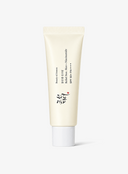
Relief Sun : Rice + Niacinamide (50ml)
Regular price
$28.00
Sale price
$18.00
UP TO 15% OFF AT CHECKOUT

BEST
36% OFF
Beauty of Joseon
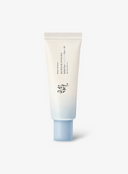
Relief Sun Aqua-Fresh : Rice + B5 (SPF50+ PA++++) (50ml)
Regular price
$28.00
Sale price
$18.00
UP TO 15% OFF AT CHECKOUT


BEST
32% OFF
Round Lab
Birch Moisturizing Sunscreen (50ml)
Regular price
$44.00
Sale price
$30.00
UP TO 15% OFF AT CHECKOUT


32% OFF
Round Lab
Birch Juice Moisturizing Tone Up Sun Cream SPF 50+, PA++++ (50ml)
Regular price
$44.00
Sale price
$30.00
UP TO 15% OFF AT CHECKOUT


28% OFF
Aestura
Derma UV 365 Barrier Hydro Mineral Sunscreen (SPF 50+ PA++++) (40ml)
Regular price
$64.00
Sale price
$46.00
UP TO 15% OFF AT CHECKOUT


BEST
21% OFF
Numbuzin
No.1 Clear Filter Sun Essence (50ml)
Regular price
$38.00
Sale price
$30.00
UP TO 15% OFF AT CHECKOUT


BAERRY PICK
26% OFF
Medicube
PDRN Pink Tone Up Sun Cream (SPF50+ PA++++) (50ml)
Regular price
$50.00
Sale price
$37.00
UP TO 15% OFF AT CHECKOUT


BEST
38% OFF
APLB
Retinol Vitamin C Vitamin E Sunscreen (SPF50+ PA++++) (40ml)
Regular price
$26.00
Sale price
$16.00
UP TO 15% OFF AT CHECKOUT


K-beauty Sunscreen Labels Decoded: What SPF, PA, Mineral and Chemical Actually Mean
TL;DR: Korean sunscreen has a lot going on in its label. This guide is your quick walk-through. SPF tells you how much UVB (the burning rays) the sunscreen blocks. PA tells you how much UVA (the aging rays) it blocks. Mineral filters sit on top of your skin and reflect UV. Chemical filters absorb into the top layer and turn UV into a small amount of heat. Most K-beauty sunscreens are hybrid (both), which is why they feel lighter and rarely leave white cast.
It's K-Pop Concert Season — Here's What's On Their Sunscreen Bottles
It's late May 2026 and concert season is back. The Rose are about to kick off their ROSETOPIA US tour. BTS is continuing their Worldwide Arirang Tour — more on what's in their sun-care kit in our Best K-Beauty Sunscreens for BTS Arirang Concerts guide. Korean American artists like Audrey Nuna are headlining festivals. If you have ever wondered how these K-pop stars have flawless skin despite being in the sun, singing under the heat, the answer might be their obsession with sunscreen.
Now you're looking through the list of Korean sunscreens. What do all of these strange labels mean? No worries, I am here to help you. This guide explains every part of that label in plain English.
What Does SPF Mean?
SPF stands for Sun Protection Factor. It measures how well the sunscreen blocks UVB rays — the kind of ultraviolet light that causes sunburn and contributes to skin cancer.
The number is roughly how much longer you can stay in the sun before burning, compared to wearing nothing. So in lab tests:
Above SPF 50, the extra protection is small. The American Academy of Dermatology recommends SPF 30 as a minimum. But most K-beauty sunscreens are SPF 50 as a baseline. That extra cushion matters because most people only apply about a quarter to a half of the amount used in the lab tests — so the "real-life" SPF you actually get is usually lower than what's printed on the bottle.
What Does PA Mean?
PA stands for Protection Grade of UVA. UVA is the long-wavelength UV that ages your skin — wrinkles, dark spots, loss of firmness — and it's the one that goes deeper. UVA is the same year-round, in every season, and it goes through windows. That's why daily sunscreen matters even if you're just at a desk — and according to Doral Health & Wellness, up to 80% of UV rays still penetrate cloud cover, so an overcast day in May or a rainy concert is not a sunscreen-skip day.
One more thing dermatologists keep repeating: deeper skin tones are not exempt. Higher melanin gives some natural buffer, but everyone — from the lightest to the deepest skin — can still get UV damage and skin cancer. Deeper skin tones can also develop hyperpigmentation faster than they burn, which makes daily SPF the main defense against the dark spots and uneven tone Korean skincare is famous for treating after the fact.
PA is rated with plus signs:
The PA system was developed in Japan in the 1990s and is used across Asia. American sunscreens use the phrase "broad-spectrum" instead, which is less specific — the FDA's "broad-spectrum" label just means "the product protects against both UVA and UVB to some degree" without telling you how much UVA. So a Korean label that says SPF 50+ PA++++ is actually telling you more than a US drugstore label that says SPF 50 broad-spectrum.
Mineral vs Chemical Sunscreen: What's Actually In the Bottle
Sunscreens use UV filters — the active ingredients that block or absorb UV. There are two main families.
Mineral Filters (Physical Sunscreen)
The two mineral filters approved worldwide are zinc oxide and titanium dioxide. They sit on top of your skin and reflect or scatter UV rays away from you, like tiny mirrors.
Pros: Start working the second you put them on. Often recommended for sensitive skin and pregnancy. If you have rosacea, your dermatologist may have recommended this as well. Reef-safe.
Cons: Traditional mineral sunscreens leave a white cast — especially noticeable on deeper skin tones — and can feel thicker or heavier on the face.
Chemical Filters
Chemical filters have names like avobenzone, octocrylene, ethylhexyl methoxycinnamate, Uvinul A Plus, Tinosorb S, Tinosorb M, and Uvinul T 150. They absorb UV into the top layer of your skin and convert that energy into a very small amount of heat.
Pros: Lighter texture. Disappear on every skin tone. Layer cleanly under makeup.
Cons: Take about 15 minutes to start working — so you put them on before you head out, not at the door.
Hybrid Sunscreen
Most modern K-beauty SPFs are hybrid — they combine mineral and chemical filters. You get the immediate protection of zinc with the lightweight, no-white-cast feel of modern chemical filters. This is the format most beauty editors and K-beauty creators reach for first.
How To Choose Your Sunscreen
When choosing a sunscreen, check the label for four things:
Mayo Clinic Press uses a similar checklist for picking a daily sunscreen — broad-spectrum, SPF 30 or higher, water-resistant if you'll sweat or swim, and a formula that suits your skin type (oil-free or non-comedogenic for acne-prone, mineral with zinc oxide or titanium dioxide for sensitive). If you have a history of reacting to chemical sunscreens, Mayo flags oxybenzone as the most common irritant to watch for in older US drugstore formulas; modern K-beauty SPFs almost never include it.
That's why something like Beauty of Joseon Relief Sun: Rice + Probiotics (rice + probiotics + a modern hybrid filter blend) earns a recommendation: it hits all four boxes, and it sinks in fast with zero white cast even on deeper skin tones. For the mineral side — especially if your dermatologist has steered you that way for sensitive or barrier-stressed skin — Aestura Derma UV 365 Barrier Hydro Mineral Sunscreen is the derma-lineup pick that holds up across long outdoor stretches without leaving the chalky finish older mineral creams used to.
How to Read a Korean Sunscreen Label (Cheat Sheet)
For the universal version of label-reading (broad-spectrum, SPF, water-resistant claims, drug facts panel), the Skin Cancer Foundation's "How to read a sunscreen label" guide is the cleanest one-pager. Below is the same exercise applied specifically to a Korean bottle.
Front of the bottle, left to right, you'll usually see:
Back of the bottle, in the ingredient list:
What This Looks Like in Real Idol Routines
You don't have to go to this extreme (even if this is how we do it in Korea), but it goes to show how serious Koreans are about sunscreen and why we consider this the basis of K-beauty!
Sources:
This post is editorial commentary. Baerry is not affiliated with, endorsed by, or sponsored by any artist, band, label, tour, sponsor, venue, or brand named or referenced above. Documented public statements and on-camera footage are cited for editorial purposes only. All trademarks are the property of their respective owners.
FAQ
Barely. SPF 50 blocks about 98% of UVB. SPF 100 blocks about 99%. Above SPF 50, the extra protection is small, and a higher SPF can give a false sense of security — people skip reapplying. The bigger factor is reapplying every two hours per AAD guidance. Even SPF 100 wears off.
Neither is universally better. Mineral is often a first pick for sensitive skin, pregnancy, rosacea, or reef-safe contexts. Chemical (or hybrid) is usually a better daily wear because it disappears on every skin tone, layers under makeup, and feels lighter. Most K-beauty SPFs are hybrid for that reason.
It means the product passed an FDA test showing it protects against both UVA and UVB. It doesn't tell you how much UVA protection you're getting — the test is pass/fail. That's why a Korean label with PA++++ is more informative than a US label with broad-spectrum.
Sunscreens are regulated as over-the-counter drugs in the US (not cosmetics like in Europe and Korea), which means a much longer and more expensive approval pathway. Filters that have been used safely for 20+ years in Korea, Europe, and Japan still don't have FDA approval. The 2014 Sunscreen Innovation Act tried to fix this, but no new filter has been approved since.
A small percentage of people react to specific filters (oxybenzone is the most common offender). If you've reacted to chemical sunscreens before, look for fragrance-free, alcohol-free formulas with newer-generation filters like Tinosorb S, or switch to a mineral SPF.
Beauty has always been more of an obsession than a hobby for Sophi. As Baerry’s beauty intern, she’s usually the first to know what’s trending, the first to try it, and the one who somehow needs a full hour to do her makeup—even on a work trip. An INFP, cat lover, and unapologetic beauty spender, she’d pick a new lip product over a new outfit any day.